iPhone 4S em Portugal a partir de 629 euros

Já é conhecido o preço do iPhone 4S em Portugal. A Apple vende-o desbloqueado a partir de 629 euros (versão 16GB).

RYNO: Moto eléctrica de uma roda

Tem um sistema de equilíbrio semelhante à Segway e promete competir com a Vespa e as scooters eléctricas.

DeLorean regressa ao futuro

Um novo modelo DeLorean vai sair da linha de montagem na Irlanda do Norte. Agora, eléctrico.

Veículos eléctricos livres de impostos em 2012

Os veículos exclusivamente eléctricos continuam isentos do imposto sobre veículos (ISV) em 2012.

Carro eléctrico: Preços em Portugal

Preços dos veículos eléctricos em comercialização em Portugal.

STAY HUNGRY, STAY FOOLISH!

Vídeo legendado e transcrição do discurso de 2005 de Steve Jobs em Stanford.

Showing posts with label BATTERIES. Show all posts

Range Anxiety: Fact or Fiction?

From National Geographic: One spring day in 2009, software engineer Bill Arnett slid behind the wheel of his new electric Tesla Roadster and set off toward Yosemite National Park, a journey of about 200 miles from his home in Redwood City, California.

Far from urban centers and up through the Sierra Nevada foothills, this is the sort of road trip that's supposed to strike fear in the heart of an electric car driver. "Range anxiety" is the name for angst over being stranded with a dead battery, miles from a plug.

Yet Arnett made the Yosemite trip without fear. He was driving his "Signature One Hundred" series Roadster —a high-end sports car said to travel up to 244 miles on a full charge. A year later, he did it again in a convoy with four other Tesla owners, stopping to top off at an RV resort about 35 miles outside of Yosemite. "Range anxiety," Arnett said in an email, "doesn't exist for me."

But range anxiety does exist, at some level, among the general public. A survey conducted last year by the Consumer Electronics Association found 71 percent of respondents feared running out of charge on the road—placing range anxiety among the most common perceived disadvantages of electric vehicles, according to the study.

A number of strategies for putting range anxiety to rest have emerged in recent years, and the pace is poised to pick up as more electric cars roll out. Governments from the United States to China to Ireland are investing millions of dollars to install charging infrastructure so drivers needn't stray too far from a plug. Software developers are building applications for smartphones and in-car telematics systems that make it easy to find charge points on a map.

The startup Better Place, based in Palo Alto, California, aims to set up large networks of charge points and stations where batteries can be swapped out in five minutes or less—theoretically affording the convenience and ubiquity of gas stations. The company has just opened its first European location where consumers can sign up for Better Place service plans and order a Renault Fluence Z.E. vehicle, designed to be compatible with Better Place's automated battery-swap system. General Motors, meanwhile, has opted to equip its plug-in hybrid Chevy Volt with a small gas engine to power the car for about 250 miles beyond the battery pack's estimated 25-50-mile range.

"It's a logical notion that a car with less range creates anxiety," said Marc Geller, a longtime electric vehicle advocate and co-founder of Plug In America. "Automakers and critics have long suggested that it was a critical flaw," he said. As a hurdle for electric vehicle adoption, however, Geller believes the issue has been overblown. Whether you are driving a Hummer or a Prius or a Leaf, he reasoned, "When you're nearing empty, there's anxiety." So the important question, he said, is not whether this anxiety exists, but whether it increases or decreases when people drive an electric vehicle.

The Realities for Electric Vehicle Owners

People who are new to electric cars generally come to the experience with some level of apprehension about range, said Geller, "If only because they've been told to." But for most people, it drops off over time. "The number of people who actually run out of juice," he said, "is very small."

"On a normal day," said Geller, who owns a RAV4 EV and a Nissan Leaf, "there's absolutely no concern about range." On a day when he expects to drive about 100 miles (the distance Nissan says some drivers can drive on a full charge, although the EPA pegs the Leaf's range at 70 miles), nipping range anxiety in the bud requires a simple strategy: "I plan." That can mean building in time for charging along the way or at his destination, he said. If he's going to travel from San Francisco to Sacramento, for example, Geller looks up charge points the day before, checking locations and ascertaining whether any stations are broken or unavailable.

Infrastructure for higher voltage "fast charging" will be a "welcome addition to the toolset," especially for intercity travel, said Geller. These "level 3" charging stations can deliver an 80 percent charge in about 30 minutes at 440V, compared to several hours for a full charge with a standard 240V ("level 2") charger. "If someone has to go 60 miles, and there's a fast charger on that corridor," they would be more likely to leave a gas car at home, he said.

For Arnett, the software engineer who has put his Roadster to the test with road trips to Yosemite, it's rare for the charge level to drop below even 50 percent. But he has experienced the EV equivalent of running on fumes, reaching home with only a few miles of range left. "That was because I made too many wrong turns coming home from a trip to Napa," he explained. Plus, he had been in a hurry to get home so he didn't wait for a 100 percent charge before leaving Napa. "I charged just enough to get home with a little extra margin," he said. "I used all the margin."

Other factors outside of a driver's control can accelerate depletion of the battery charge and potentially set the stage for range anxiety. In winter conditions, the Chevy Volt (which runs its heater on electricity) delivered only 23 to 28 miles of range on electric power in initial assessments published by Consumer Reports last week. The Nissan Leaf has averaged about 65 miles of range in the magazine's preliminary tests, and its mileage gauge has proven unreliable. In at least one instance with the heater on, the gauge dropped unexpectedly to 19 miles from 36 miles, according to Consumer Reports. For someone 25 miles from an outlet, anxiety would be a reasonable response.

Hans Tobeason, a TV writer and producer living in Los Angeles who drove an EV1 during the 1990s and now owns a Nissan Leaf, has also peered into the abyss of a dwindling battery charge. With the EV1, Tobeason said, he ran out of juice about once a year. Upon realizing that he "wasn't going to make it," he would pull up to a friend's house nearby and plug in for a couple hours using an emergency charger.

With the Leaf, said Tobeason, "I wouldn't be surprised if I goof up once a year," and need to make an unplanned stop for charging. As more charging stations are installed and opened to the public, however, it may not be necessary to prevail upon friends for an outlet.

Read more at NG...

VIDEO: Nissan EV battery plant in Portugal

From Reuters: Nissan Motor expects to start producing electric vehicle batteries at its new plant in Portugal by the end of next year, and aims for annual output of 50,000 by 2015.

"It's a big step in Nissan's global zero emission strategy," Chief Operating Officer Toshiyuki Shiga said on Friday after the company broke ground on a plant in northern Portugal.

Nissan and its French partner Renault are the most aggressive proponents of battery-powered cars, aiming to become the first in the world to sell them in large numbers with a global rollout of eight models in 2012.

"We are investing 156 million euros to start production in December 2012 and produce 50,000 batteries per year by 2015," Shiga said of the Portugal plant.

The plant, set to employ 200 people, will be one of the main battery supply bases for both Nissan and Renault's EVs, starting with the Leaf model Nissan launched in December.

Nissan started building a plant in Sunderland in the United Kingdom last April with a projected production of 60,000 batteries per year, while Renault's factory in France's Flins targets a total capacity of 100,000 a year.

The company does not rule out selling batteries to other EV manufacturers.

"This plant will produce, for now, for the Renault-Nissan alliance, but given our business stance and environmental values, if other clients are interested, then we are open to selling the batteries," Nissan executive vice-president Carlos Tavares told reporters.

The plant is another step in Nissan's alliance with Portugal, following a deal that will see the Iberian country roll out the world's first nationwide EV charging network, with 1,300 charging points due to be installed by June.

"This is what the country needs -- new factories, new investments, more production and more jobs," Prime Minister Jose Socrates said at the ground-breaking ceremony.

Lítio 'pode tornar Portugal rico'

No Expresso: Um estudo divulgado esta semana pela empresa de consultoria MarketResearch.com indica que a procura de litío para a construção de baterias de iões de lítio para a indústria automóvel vai quadriplicar ao longo dos próximos 10 anos.

O mesmo estudo revela que em 2010 o mercado mundial de lítio ascendeu a 11 mil milhões de dólares (€8 mil milhões), mas que em 2020 deverá rondar os 43 mil milhões de dólares (€31,5 mil milhões).

Alguns analistas do setor extrativo garantem ao Expresso que Portugal tem aqui uma oportunidade única para "marcar pontos" neste importante mercado, pois atualmente já é o 5º maior exportador mundial de lítio, e tem potencial de exploração para mais 70 anos. Estes dados são confirmados, aliás, num dos relatórios mais recentes do Departamento de Energia norte-americano.
Indústria automóvel interessada no lítio português

O problema é que Portugal apenas vai até à produção de concentrado de lítio, ou seja, não acrescenta mais valor ao seu produto, tendo que o vender em bruto para os smelters (proprietários de fundições) de outros países. Esses, sim, é que entregam à indústria automóvel o lítio pronto para ser utilizado em baterias de carros elétrios. São também estes intermediários que faturam uma parte considerável do processo de transformação do lítio.

O Expresso sabe, no entanto, que o principal produtor de lítio em Portugal está já a ser sondado por várias empresas multinacionais da indústria das baterias para carros elétricos, no sentido de formar parcerias que possam passar pela criação de uma fundição em Portugal. Ou seja, poderia ser um passo à frente no processo, em que o país acrescentaria valor ao seu recurso natural.

Para além da indústria automóvel, o lítio também, é utilizado na indústria eletrónica (telemóveis), farmacêutica e prevê-se que venha a ter cada vez mais aplicações na indústria aeroespacial e também na área militar.

A preocupação das construtoras de automóveis é tão grande em relação ao lítio que algumas já estão a entrar no capital social de algumas empresas mineiras em várias zonas do globo. A nipónica Mitsubishi ainda recentemente tomou posição em algumas empresas do sector extrativo, na área do lítio, em dois países da América do Sul.

Com estes avanços para a área mineira, a indústria automóvel quer garantir, de alguma forma, que não vai ter problemas no abastecimento dessa importante matéria-prima, para que a nova área de negócio dos carros elétricos, que agora desponta, não fique comprometida.

Carlos Tavares entrevistado pelo Público


No Público: Carlos Tavares é vice-presidente executivo do grupo japonês Nissan. O gestor português diz que a nova fábrica de Cacia poderá receber outros componentes para além dos módulos para baterias, se demonstrar que é eficiente. "Se os resultados atingirem as expectativas, há outras oportunidades possíveis", sublinha.

Portugal está bem colocado para ter uma fábrica de baterias produtiva?
Estamos confiantes. Uma das razões é que temos aqui ao lado a fábrica da Renault de Cacia, que fabrica com grande sucesso caixas de velocidade com um nível de qualidade muito elevado e um custo competitivo. Não há razão para que não se duplique esse sucesso na Nissan, a nível das baterias.

As baterias vão ser montadas aqui na fábrica, mas os componentes virão de vários mercados. Já é possível calcular a incorporação portuguesa?
Ainda é um pouco cedo, mas pensamos que o nível de incorporação europeia vai ser da ordem dos 50 por cento, quando a fábrica começar a produzir. À medida que a produção for aumentando, vai haver oportunidades para que pouco a pouco se possam utilizar mais os fornecedores locais.

Já há contactos a serem feitos?
Ainda é muito cedo. Queremos ser bastante prudentes, porque só se lança uma tecnologia nova, como a dos veículos eléctricos, fazendo as coisas com muita calma e todas as verificações com um nível de rigor muito elevado.

Mas já iniciaram algum processo de identificação de parceiros a nível local?
Acho que não vai tardar.

E o que vai ser feito na fábrica?
Vai ser a fabricação das células e dos módulos das baterias. Cada módulo tem quatro células e é necessário construir um pack com um determinado número de módulos. Para o pack da bateria do Nissan Leaf, por exemplo, são necessários 48 módulos. O que vai ser fabricado aqui são os módulos, que serão depois exportados para as fábricas de montagem dos automóveis. Como os packs de baterias são bastante grandes e pesados - pesam quase 300 quilos - faz mais sentido montá-los muito perto da montagem do automóvel.

Poderá haver produção de outros componentes dentro da fábrica?
Nunca se sabe. Nos veículos eléctricos há também motores eléctricos, inversores, cabos eléctricos, conectores... O que é importante, do ponto de vista nacional, é que se demonstre a capacidade desta equipa para produzir os componentes de baterias de maneira muito eficiente. Se esses resultados atingirem as expectativas, há outras oportunidades possíveis. Mas isso só se saberá mais tarde.

Que fábricas é que irão receber baterias de Portugal?
Vamos começar pela fábrica da Renault em Bursa, na Turquia, para o Renault Fluence, e depois se verá as seguintes. Ainda não está decidido, mas obviamente que vai haver outras.

O Nissan Leaf também vai ser fornecido por Portugal?
Vai ser fornecido para já pela fábrica de baterias de Sunderland (Reino Unido), mas depois tudo vai depender das capacidades e da procura de mercado.

Uma das principais questões levantadas quanto ao carro eléctrico é a autonomia limitada na condução. Estão à procura de novas soluções?
Pelo mundo fora, temos entre 60 e 70 modelos diferentes da marca Nissan, e obviamente que não temos intenção de os substituir a todos por um veículo eléctrico. Neste caso, esse será o carro ideal para um tipo de utilização que em inglês designamos por commuting (percurso casa-trabalho). Outro factor muito importante é que carregar uma bateria custa dois ou três euros. Isso vai criar o interesse de entidades comerciais, como restaurantes ou hotéis, em fornecerem um ponto de carregamento gratuito para atraírem clientes, uma vez que o custo dessa energia é muito baixo.

Outra preocupação é a vida útil das baterias. Calcula-se que ao fim de cinco anos as baterias estarão a 80 por cento da capacidade...
Os cinco anos são a garantia da bateria que é oferecida com o automóvel, mas a vida da bateria é muito maior. Agora, isso coloca-nos também numa situação de oportunidade relativamente ao segundo ciclo de vida. Abre perspectivas de negócio, como o reaproveitamento das baterias para serem utilizadas como backup de sistemas informáticos, ou para o armazenamento de energia em casas particulares. Pode carregar uma bateria de noite e utilizar essa energia em casa, ou carregá-la utilizando painéis solares... Temos aqui uma visão de autonomia energética muito interessante do ponto de vista familiar.

Neste momento, o Nissan Leaf custa cerca de 30 mil euros aos consumidores. Quando prevêem que seja possível reduzir esse custo?
Irá acontecer à medida que se atingirem níveis de produção entre 500 mil e um milhão de baterias por ano, mas não conseguimos saber exactamente quando. Mas temos de estar preparados para quando terminarem os incentivos públicos à aquisição de veículos eléctricos, uma vez que esses apoios não são eternos.

Qual será a duração para esses incentivos em Portugal?
Estão limitados aos primeiros cinco mil veículos adquiridos, mas essa situação vai provavelmente ser revista. Nos EUA, está prevista uma redução do preço de 7500 dólares para os primeiros 200 mil veículos Nissan Leaf.

Outro dos incentivos portugueses é que 20 por cento da frota do Estado terá de ser composta por veículos eléctricos. Isso pode ser uma ajuda para a Nissan?
Esta é uma decisão que demonstra a compreensão do Governo da necessidade de apoiar os carros eléctricos. Mas naturalmente que neste domínio iremos concorrer com outros construtores, no âmbito do concurso que for lançado. Gostamos muito de competição.

Sócrates: 'Carro eléctrico é o carro do futuro'

No Diário Económico: O primeiro-ministro lançou hoje a primeira pedra da fábrica de baterias da Nissan em Aveiro.

"Inicia-se a construção de um novo cluster da mobilidade eléctrica em Portugal. É disto que o País precisa: de novas fábricas, novos investimentos, mais produção, mais emprego", disse o primeiro-ministro que esteve hoje presente na cerimónia de início de construção da fábrica de baterias da Nissan em Portugal.

Sócrates acrescentou que o País lutou "muito para que a fábrica fosse construída em Portugal" e para que "em Portugal pudesse existir o cluster da mobilidade eléctrica".

Na mesma ocasião, o primeiro-ministro frisou que a fábrica "garante que estamos na linha da frente do carro eléctrico" e confessou: "o carro eléctrico é para mim o carro do futuro, não tem emissões e não tem poluição sonora".

A construção da fábrica de baterias eléctricas da japonesa Nissan tem um investimento total de 160 milhões de euros e irá criar 200 postos de trabalho especializados, mais algumas centenas de empregos indirectos. A produção deverá começar em 2012.

What consumers need to know about electric car batteries

From the Contra Costa Times: A variety of electric vehicles will hit the market this year, raising questions about the most critical element of any electric car: the battery.

How often do you have to replace the battery? Will it be recycled? Can you charge a battery even if it is not empty? How many charging cycles can the battery handle? Is it true there's a worldwide shortage of lithium?

Lithium-ion batteries can be found in all kinds of consumer products, from laptops to cell phones, and they also will be the power source in at least the first generation of electric cars -- an EV battery is really just a cluster of thousands of cell phone batteries packaged together.

"If I want to buy an electric vehicle, I would want to know how many miles can I drive under REAL driving conditions, how long will my battery last and how long will the battery take to charge," said Venkat Srinivasan, a staff scientist at the Lawrence Berkeley National Lab who writes a popular battery blog at www.thisweekinbatteries.blogspot.com.

The plug-in hybrid Chevy Volt and all-electric Nissan Leaf, the first mainstream plug-ins to reach the market, both offer battery warranties good for 100,000 miles or eight years. That will reassure many consumers, but there still are things they can do to maximize battery life and performance.

"Don't keep continuously fully charging and discharging them," Srinivasan said. "Pressing on the accelerator too much also draws power from the battery at a high rate, and can cause degradation."

Sunil M. Chhaya, an electric drive expert at EPRI, the Electric Power Research Institute, notes that batteries age faster if the temperature of the battery is frequently elevated, and EPRI research has found that heat management inside the batteries is the single most important predictor of battery health and longevity. That's one reason why Tesla uses a liquid cooling system to maximize the life of its battery packs.

"Batteries are like people and perform nicely when their operating temperature is in a 20-45 degrees Celsius (or 68-113 degrees Fahrenheit) window," Chhaya said. "Outside of it, they need to be 'thermally managed,' either by efficient inflow (if the batteries are cold) or outflow (if batteries are hot) of heat with a well-designed thermal system."

Read more...

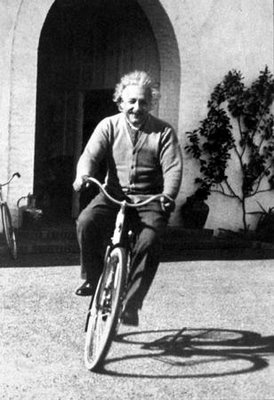
Einstein and car batteries: Without the magic of relativity, a car’s starter motor would not turn

From The Economist: Albert Einstein never learned to drive. He thought it too complicated and in any case he preferred walking. What he did not know—indeed, what no one knew until now—is that most cars would not work without the intervention of one of his most famous discoveries, the special theory of relativity.

Special relativity deals with physical extremes. It governs the behaviour of subatomic particles zipping around powerful accelerators at close to the speed of light and its equations foresaw the conversion of mass into energy in nuclear bombs. A paper in Physical Review Letters, however, reports a more prosaic application. According to the calculations of Pekka Pyykko of the University of Helsinki and his colleagues, the familiar lead-acid battery that sits under a car’s bonnet and provides the oomph to get the engine turning owes its ability to do so to special relativity.

Relative values

The lead-acid battery is one of the triumphs of 19th-century technology. It was invented in 1860 and is still going strong. Superficially, its mechanism is well understood. Indeed, it is the stuff of high-school chemistry books. But Dr Pyykko realised that there was a problem. In his view, when you dug deeply enough into the battery’s physical chemistry, that chemistry did not explain how it worked.

A lead-acid battery is a collection of cells, each of which contains two electrodes immersed in a strong solution of sulphuric acid. One of the electrodes is composed of metallic lead, the other of porous lead dioxide. In the parlance of chemists, metallic lead is electropositive. This means that when it reacts with the acid, it tends to lose some of its electrons. Lead dioxide, on the other hand, is highly electronegative, preferring to absorb electrons in chemical reactions. If a conductive wire is run between the two, electrons released by the lead will run through it towards the lead dioxide, generating an electrical current as they do so. The bigger the difference in the electropositivity and electronegativity of the materials that make up a battery’s electrodes, the bigger the voltage it can deliver. In the case of lead and lead dioxide, this potential difference is just over two volts per cell.

That much has been known since the lead-acid battery was invented. However, although the properties of these basic chemical reactions have been measured and understood to the nth degree, no one has been able to show from first principles exactly why lead and lead dioxide tend to be so electropositive and electronegative. This is a particular mystery because tin, which shares many of the features of lead, makes lousy batteries. Metallic tin is not electropositive enough compared with the electronegativity of its oxide to deliver a useful potential difference.

This is partly explained because the bigger an atom is, the more weakly its outer electrons are bound to it (and hence the further those electrons are from the nucleus). In all groups of chemically similar elements the heaviest are the most electropositive. However, this is not enough to account for the difference between lead and tin. To put it bluntly, classical chemical theory predicts that cars should not start in the morning.

Which is where Einstein comes in. For, according to Dr Pyykko’s calculations, relativity explains why tin batteries do not work, but lead ones do.

His chain of reasoning goes like this. Lead, being heavier than tin, has more protons in its nucleus (82, against tin’s 50). That means its nucleus has a stronger positive charge and that, in turn, means the electrons orbiting the nucleus are more attracted to it and travel faster, at roughly 60% of the speed of light, compared with 35% for the electrons orbiting a tin atom. As the one Einsteinian equation everybody can quote, E=mc2, predicts, the kinetic energy of this extra velocity (ie, a higher E) makes lead’s electrons more massive than tin’s (increasing m)—and heavy electrons tend to fall in and circle the nucleus in more tightly bound orbitals.

That has the effect of making metallic lead less electropositive (ie, more electronegative) than classical theory indicates it should be—which would tend to make the battery worse. But this tendency is more than counterbalanced by an increase in the electronegativity of lead dioxide. In this compound, the tightly bound orbitals act like wells into which free electrons can fall, allowing the material to capture them more easily. That makes lead dioxide much more electronegative than classical theory would predict.

And so it turned out. Dr Pyykko and his colleagues made two versions of a computer model of how lead-acid batteries work. One incorporated their newly hypothesised relativistic effects while the other did not. The relativistic simulations predicted the voltages measured in real lead-acid batteries with great precision. When relativity was excluded, roughly 80% of that voltage disappeared.

That is an extraordinary finding, and it prompts the question of whether previously unsuspected battery materials might be lurking at the heavier end of the periodic table. Ironically, today’s most fashionable battery material, lithium, is the third-lightest element in that table—and therefore one for which no such relativistic effects can be expected. And lead is about as heavy as it gets before elements become routinely radioactive and thus inappropriate for all but specialised applications. Still, the search for better batteries is an endless one, and Dr Pyykko’s discovery might prompt some new thinking about what is possible in this and other areas of heavy-element chemistry.